Supporting Cross-Border Grain Trade in Namanga
3 min read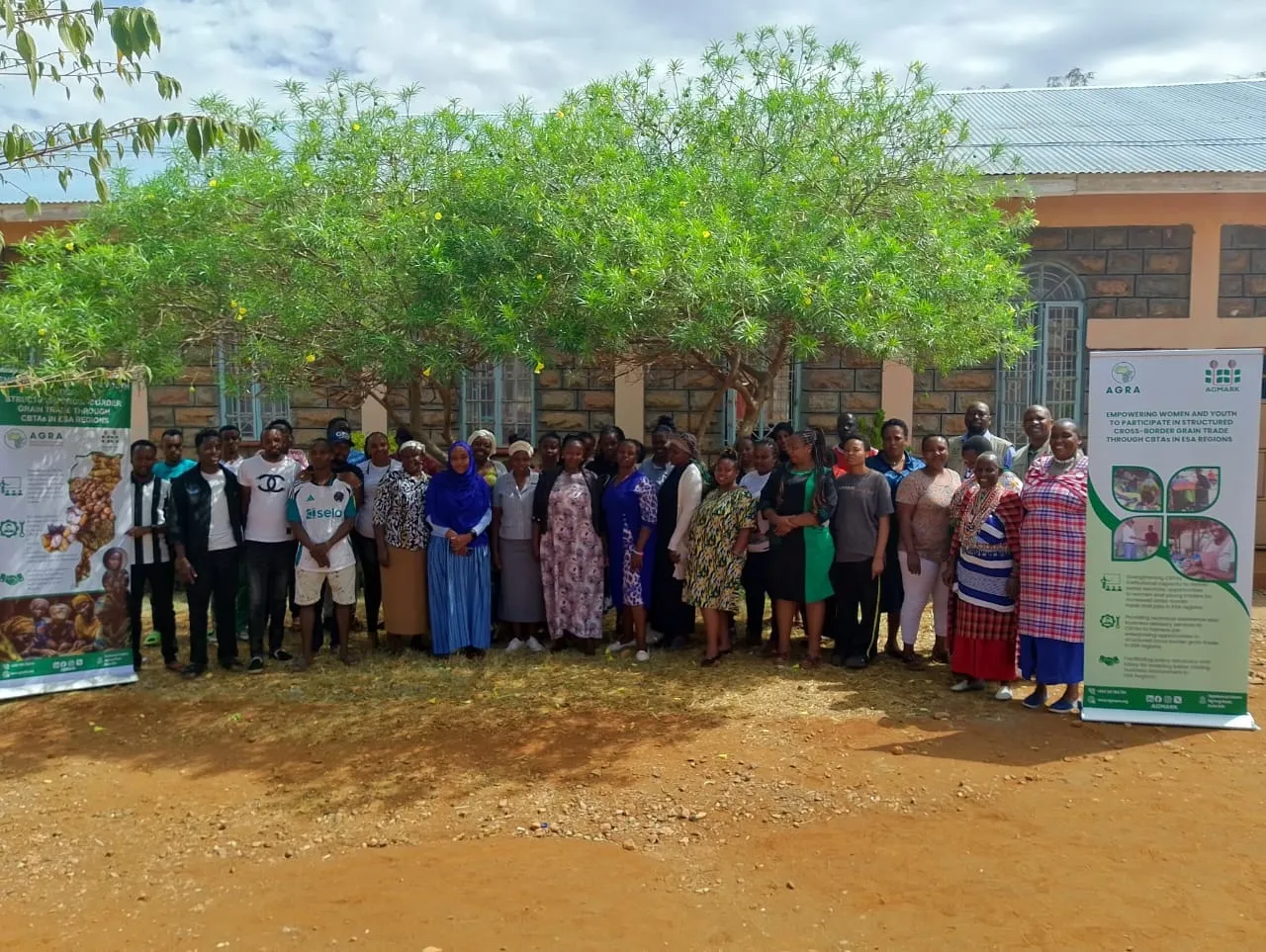
September 2025: A Three-Day Training at AIC Namanga Conference Hall
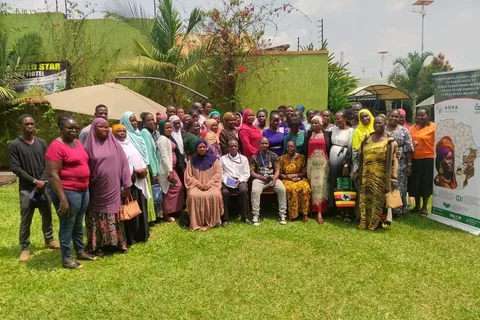
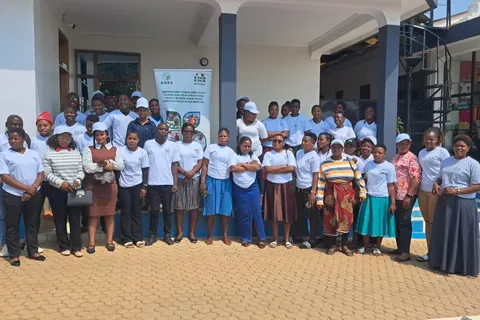
Between 24 and 26 September 2025, AGMARK ran a three day training in Namanga, Kenya to strengthen Cross-border grain trade in Namanga by building trader skills in structured grain trading systems, negotiation, and postharvest management. The event brought 37 beneficiaries together, 18 of which were youth, and linked CBTAs with 17 stakeholders from government and private sector agencies at AIC Namanga Conference Hall, Kenya. This training is part of our on going project entitled “Empowering Women and Youth to Participate in Structured Cross-Border Grain Trade through CBTAs in Eastern and Southern Africa” in collaboration with AGRA. The project focuses on specific targeted value chains, namely: maize, soybeans, common beans, rice, and ground nuts.
Also Read: Empowering Women and Youth in ESA Grain Trade Launch
Cross-Border Grain Trade in Namanga Summary
The three day agenda combined AGMARK modules on negotiation and contracting with an introduction to structured grain trading systems recognized by COMESA. Sessions on grain standards and postharvest management were particularly prominent. Trainers used a participatory approach, encouraging peer learning and practical exercises, and participants completed trader profiles, evaluations, and registration on the COMESA Food Balance Sheet platform during the workshop.
Stakeholder Presentations and Regulatory Clarity
Representatives from the Kenya Bureau of Standards and the Agriculture and Food Authority explained quality rules and licensing, while the Namanga Kenya Border management headed by the Kenya Revenue Authority (KRA) Station Manager, Mr. Nicholas Mugambi, presented the simplified trader regime and e-customs procedures to enlighten traders on exemptions for consignments valued under $2,000 that can lower transaction costs, and proper methods of doing business while being tax compliant. These sessions showed how compliance with harmonized standards can reduce border delays, a point echoed by regional work on regional work on food standards by COMESA.
Financial Services and Market Opportunities
Bank representatives from KCB and Equity Namanga explained account types and loan products suitable for small traders and women led enterprises. The session linked to broader estimates that informal cross border trade is large and often under recorded, making formalization and financial inclusion critical for scaling. Tanzania have largely banned Kenyan traders from visiting farms to buy crops and instead should use the auction and aggregation centers, with plans underway to create a lean border agency because currently, there are 7 agencies regulating the same items which is causes a lot of inefficiency and makes people want to trade informally. The World Bank analysis on informal cross border trade.
This training built on the governance foundations introduced at AGMARK’s earlier CBTA leadership training at Busia and Namanga, which equipped officials with the institutional skills this programme could build upon.
Also Read: Namanga Youth Traders and Women Receive Grain Trade Training
Practical Outcomes and Buyer Linkages
Traders left with concrete market leads after registering on the COMESA platform and exchanging contacts with larger buyers. A Nairobi based grain buyer was also present and signaled demand at scale, challenging traders to do business with her, offering to source 11000 bags of maize monthly if traders can meet quality and delivery schedules. These kinds of linkages show how structured trading systems and data driven aggregation can connect small traders to consistent buyers.
Postharvest Management and Quality Control
KEBS and AFA sessions emphasized moisture and chemical parameters and practical steps to reduce aflatoxin contamination, a leading cause of postharvest loss across the region. Field trainers reinforced simple handling, drying, and storage practices that cut losses, and these methods align with regional guidance on reducing postharvest losses in East Africa by the FAO.
Recommendations from Participants and Facilitators
Workshop participants and AGMARK staff proposed a set of practical next steps to sustain impact. Key recommendations included:
- Prioritize CBTA data collection so associations can forecast supply and present credible offers to buyers.
- Set aside a full day for stakeholder presentations to allow deeper Q and A with regulators and banks.
- Adjust evaluation tools for accessibility.
- Maintain structured market linkages by facilitating regular introductions between CBTAs and large traders.
The Namanga CBTA training shows how targeted capacity building for youth and women cross-border traders in Kenya and Tanzania can improve compliance with standards, reduce postharvest losses, and create stable supply relationships. AGMARK will continue to support CBTAs to use structured grain trading systems and to collect trade data that strengthens negotiation power at the border. Readers who want to learn more about the regional policy context can consult the COMESA simplified trade regime analysis and related reports.
AGMARK ran a parallel training in Arusha that same September, where Arusha grain traders worked on contracts, dispute resolution, and smallholder linkages, extending the Tanzania regional effort across the corridor.